
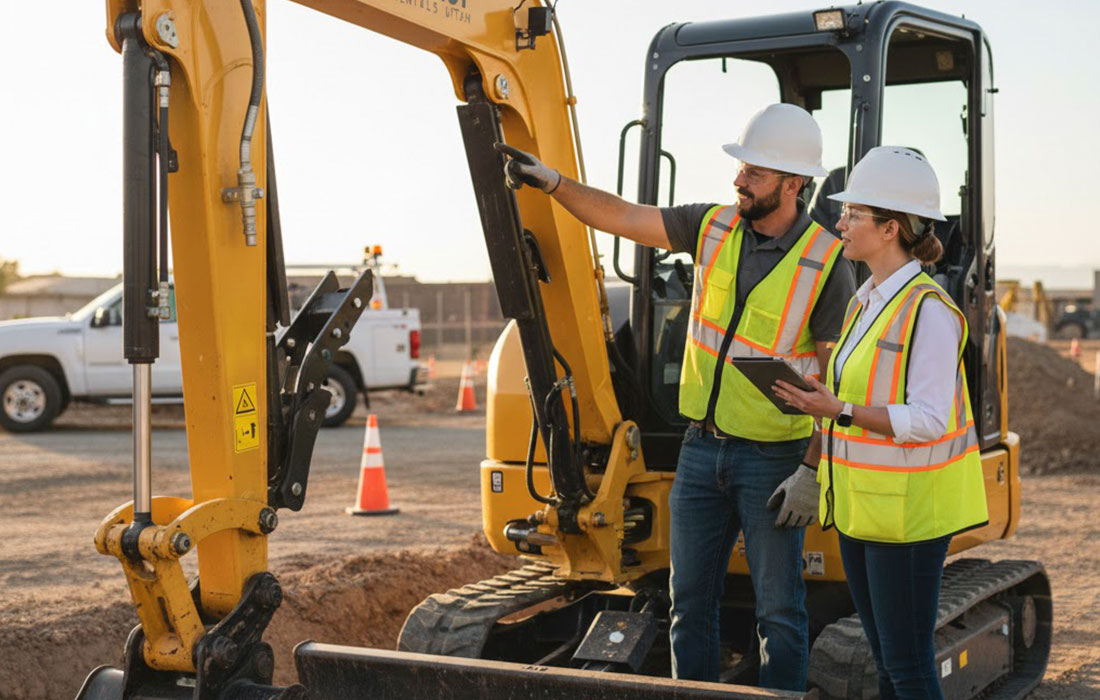
04 Feb How to Safely Operate a Mini Excavator
A mini excavator is a powerful and versatile machine, perfect for a wide range of projects from landscaping and trenching to demolition. But like any piece of heavy equipment, it requires careful handling to ensure safety on the job site. Whether you’re a seasoned contractor or a first-time renter, following proper safety procedures is non-negotiable.
This guide will walk you through the essential steps for safely operating a mini excavator. By understanding the machine and respecting its power, you can get the job done efficiently while protecting yourself and those around you. We’ll cover everything from pre-operation checks to safe digging techniques, ensuring you feel confident and prepared for your next project.
Before You Start: Pre-Operation Inspection
Safety begins before you even turn the key. A thorough pre-operation inspection is the first and most critical step. Taking a few minutes to check the machine can prevent accidents and costly downtime.
Perform a Walk-Around Inspection
Start with a visual walk-around of the mini excavator. Look for any signs of damage or wear that could compromise safety or performance.
- Tracks and Undercarriage: Check the tracks for proper tension and look for any damage, such as cuts or cracks. Inspect the rollers, idlers, and sprockets for excessive wear or debris.
- Hydraulics: Look for any hydraulic fluid leaks from hoses, cylinders, or fittings. Even a small leak can indicate a serious problem that could lead to a loss of hydraulic power.
- Boom, Arm, and Bucket: Examine the excavator’s attachments. Check for cracks in welds, loose or missing pins, and any signs of damage to the bucket’s teeth.
- Fluids: Check the levels for engine oil, hydraulic fluid, coolant, and fuel. Ensure all fluids are at the recommended levels to prevent engine damage or system failure.
Inside the Cab
- Seat and Seatbelt: Adjust the seat to a comfortable position where you can easily reach all controls. Fasten your seatbelt; it’s your most important piece of safety equipment.
- Controls: Make sure you understand the function of each joystick, lever, and pedal. If you’re renting a machine you’re unfamiliar with, like a rental mini excavator Utah residents trust, take the time to read the operator’s manual.
- Mirrors and Windows: Clean all windows and adjust your mirrors to ensure you have a clear, 360-degree view around the machine.
- Safety Features: Check that all safety features, such as the horn, lights, and backup alarm, are in working order.
Understanding the Job Site
Every job site is unique, and assessing the area is crucial for safe operation. Before you start digging, take a comprehensive look at your surroundings.
Identify Potential Hazards
Survey the work area for any potential hazards. This includes overhead power lines, underground utilities, slopes, and any obstacles on the ground. Always call 811 to have underground utility lines marked before you dig. Striking a gas, water, or electrical line can be extremely dangerous and expensive.
Plan Your Work
Establish a clear plan for your project. Determine where you will be digging, where you will pile the excavated material (spoil), and the path you will take to move around the site. Communicating this plan with anyone else on the site is essential. Make sure everyone knows the machine’s work zone and stays clear of the excavator’s swing radius. Operating on stable, level ground is always safest. If you must work on a slope, position the excavator with the tracks pointing up and down the hill, not across it, to maintain stability.
Safe Operating Techniques
With your inspections complete and your site assessed, you’re ready to start the engine. Proper operating techniques are key to using the mini excavator Utah contractors rely on safely and effectively.
Mounting and Dismounting
Always face the machine and use the three-point contact rule when getting on or off—that means having two hands and one foot, or two feet and one hand, on the machine at all times. Use the designated steps and grab handles, and never jump from the cab.
Operating the Controls
- Digging: When digging, keep the bucket low to the ground to maintain a low center of gravity. Extend the arm and boom, then curl the bucket and pull the arm toward the cab. This method is more efficient and safer than trying to force the bucket through tough ground.
- Swinging and Moving: Before swinging the boom, check your surroundings to ensure no one is within the swing radius. When traveling, keep the bucket low to the ground and curl it in. This improves stability and your visibility.
- Loading and Dumping: When loading a truck or a dump trailer rental Utah services provide, position the excavator so you have a clear view. Avoid swinging a loaded bucket over people or the cab of a truck. If you’re using a Salt Lake dump trailer rental, ensure it’s positioned on level ground before loading.
Parking and Shutdown
When you’re finished for the day or taking a break, park the excavator on a level surface away from traffic and hazards. Lower the bucket and any attachments to the ground, engage the parking brake, and shut off the engine. Remove the key to prevent unauthorized use.
Get the Right Equipment for Your Project
Operating a mini excavator safely requires knowledge, caution, and the right machine for the job. Whether you need a mini excavator rental Utah for a weekend project or heavy equipment rental Utah for a large-scale construction job, having reliable, well-maintained machinery is essential.
At Patriot Rentals LLC, we offer a wide range of equipment, from excavator rental Utah and skid steer rental Utah to trailer rental SLC. We serve Salt Lake, Utah, and Davis counties, providing hands-on training to ensure you can operate our equipment safely and effectively. Contact us today to find the right equipment for your project.
Sorry, the comment form is closed at this time.